


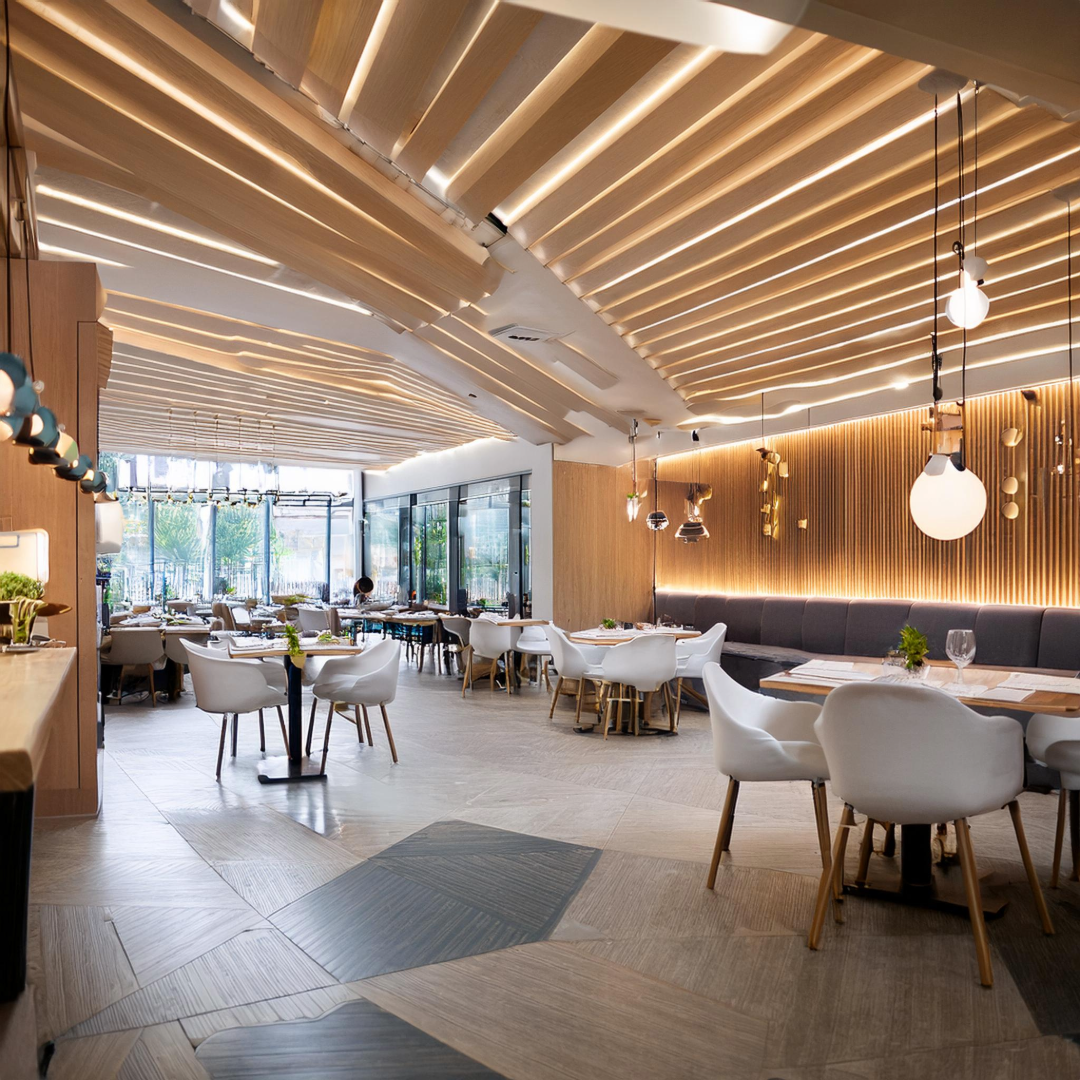


Designing Restaurant Interiors: From Simple Dinners to Six-Star Dining Experiences
Creating a restaurant interior that can seamlessly transform from casual dining to a six-star, luxurious experience is both an art and a science. As dining experiences evolve, so do customer expectations. Today’s restaurant interiors must be adaptable, exude ambiance, and showcase both simplicity and sophistication. Here, we explore how to craft an environment that accommodates diverse dining styles—from a straightforward dinner to an opulent fine-dining setting.
1. Foundations: Layout and Flow
A restaurant’s layout sets the foundation for flexibility and ambiance. Designing flexible spaces, like sectioned dining rooms or convertible spaces, allows the area to be rearranged as needed. For example, a restaurant can feature intimate nooks for casual dinners while maintaining open spaces that transform into grand dining rooms for exclusive events.
Creating multiple entry points to dining areas gives each space a sense of uniqueness. Clever use of dividers, retractable walls, and flexible seating arrangements also enables the space to adapt quickly, whether catering to an intimate couple’s meal or a large party celebrating a special occasion.
2. Lighting: The Silent Storyteller
Lighting is pivotal in determining the atmosphere of a dining space. For a more laid-back ambiance, warm, dimmed lighting is ideal as it creates a relaxed environment that feels personal and cozy. For fine dining, adjustable lighting systems allow you to create a sophisticated setting with chandeliers or pendant lights, dimmed to a level that enhances the luxurious experience.
By incorporating smart lighting solutions that can change color and intensity, you can completely transform the atmosphere within seconds. Pendant lighting, chandeliers, or sconces around high-end tables instantly set an exclusive mood, while adjustable track lighting provides versatility for multiple dining experiences.
3. Furniture: A Balance of Comfort and Style
Furniture selection should consider both comfort and adaptability. High-end materials, like leather, marble, and wood, add an air of sophistication and durability to tables and chairs, which is especially essential in creating a six-star environment. Modular tables that can be combined or separated make it easy to adjust for small gatherings or large events, giving restaurants the ability to scale for any dining experience.
Consider comfortable, cushioned seating for casual dining, alongside velvet or upholstered seating with more lavish accents for six-star setups. Ensuring all furniture is cohesive in design while being diverse in style and texture gives you the ability to tailor the atmosphere to the occasion without compromising on aesthetics.
4. Table Settings and Decor
Creating the visual journey of a table setting is essential in distinguishing different dining levels. For casual dining, minimal table settings with simple, elegant cutlery, glassware, and napkins will suffice, creating a setting that feels inviting and uncomplicated. However, for six-star dining, the table decor should feature intricate details—high-end cutlery, fine bone china, crystal glassware, and designer centerpieces, perhaps with floral arrangements or candles.
Having versatile decor options that can be swapped in or out depending on the level of service will allow the restaurant to cater to diverse clientele without overwhelming the design or feeling cluttered.
5. Materials and Finishes: Embrace Luxury or Simplicity
The material palette plays a major role in defining the space’s feel. Wood, natural stone, and metal finishes can convey both simplicity and luxury. A straightforward dinner setting might use wooden tables and simple wall textures, whereas for six-star dining, marble finishes, polished surfaces, and premium textiles like velvet or silk can add a touch of opulence.
Using quality, neutral materials that can transition between both ends of the spectrum allows you to create an interior that serves as a blank canvas, which can then be dressed up or down according to the dining occasion. Adding mirrors or reflective surfaces can also give the room depth and create a more open, luxurious feel when desired.
6. Scent and Sound: Crafting Sensory Experiences
To fully engage diners, sensory elements like scent and sound play a crucial role. Subtle background music and pleasant aromas can enhance the dining experience in a casual setting. For an elevated dining experience, carefully curated music or live performers can add an intimate touch. Likewise, scents can be adjusted: subtle floral or herbal scents for casual dining or something more exotic, such as hints of spice or citrus, for fine dining.
Investing in high-quality sound systems, soundproofing materials, and specialized air filters allows for control over the ambiance, ensuring that the sensory elements complement the overall experience.
7. Technology: Bridging Convenience and Luxury
Innovative technology can make a restaurant adaptable to any event or atmosphere. Digital systems that control lighting, music, and temperature offer flexibility, while touchless systems for ordering and payment can streamline operations for both ends of the dining experience. Some six-star restaurants incorporate augmented reality (AR) or immersive multimedia that enhances the dining experience by creating interactive environments or backgrounds.
Technology also allows restaurant operators to make adjustments quickly, especially helpful in transforming the ambiance from a relaxed dinner service to a high-end event setting in minimal time.
8. Bringing It All Together: Designing for Versatility and Experience
Ultimately, the goal is to make a restaurant that’s as versatile as it is beautiful. It should be able to host a wide range of experiences without compromising on comfort or elegance. Creating a flexible restaurant interior that embodies a welcoming charm, but can also exude luxury, can be achieved by careful planning, the right choice of materials, and thoughtful interior design elements.
A well-designed space, adaptable to both a simple dinner and a six-star dining experience, allows restaurants to meet diverse expectations and create a memorable dining journey for every guest. With thoughtful design choices and the intelligent use of space, any restaurant can elevate its dining experiences from ordinary to extraordinary, embodying both simplicity and luxury within a single space.


Reviews
There are no reviews yet.